
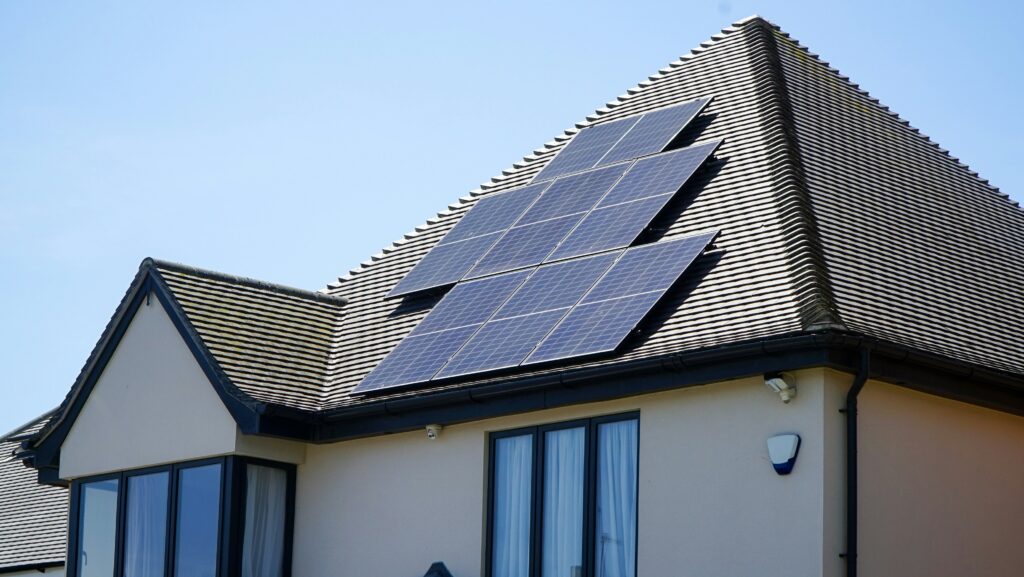
This is often the first question homeowners ask when considering solar energy. It sounds straightforward, but online answers can range from six panels to 16 or more, leaving you unsure which estimate applies to your home.
The reason for this variation is simple. The right number of solar panels depends on how much electricity you use, how powerful the panels are, how much usable roof space you have and how much sunlight reaches the roof.
Your future plans also matter. Installing a heat pump, buying an electric vehicle or switching more appliances from gas to electricity could increase your energy requirements considerably.
For many UK homes, a system containing 6 to 14 modern solar panels may be suitable. However, this is only a broad guide. A carefully designed solar panel system should be based on your annual electricity usage, your property and how you use energy throughout the day.
This guide offers practical solar panel advice to help you estimate how many panels you may need, compare solar panel options and understand what an installer should assess before recommending a system.
How Many Solar Panels Do I Need? The Quick Answer
Most UK homes need approximately 6 to 14 solar panels. A small household with low electricity use may need 5 to 7 panels, while an average family home may require 8 to 12. Larger properties, electric vehicles, heat pumps and electric heating can increase this figure. The correct number depends on annual electricity usage, panel power output, roof space, shading and roof direction.
This range is useful for an early estimate, but it is not a substitute for a site-specific calculation.
Two households may live in similar three-bedroom properties but have very different energy consumption. One may use gas heating and be empty throughout the working day. The other may have electric heating, an electric vehicle and two people working from home.
The houses may look the same from the outside, but they would not necessarily need the same solar energy system.
How Do I Calculate How Many Solar Panels I Need?
You can make a rough calculation using your annual electricity usage and the estimated yearly output of each panel.
The basic formula is:
Annual electricity usage ÷ estimated annual generation per panel = approximate number of panels
This calculation offers a useful starting point, but the final system size may need to be adjusted for roof direction, shading, available space and future electricity use.
Find your annual electricity usage
Check a recent electricity bill, your supplier’s online account or your smart meter app. Look for the amount of electricity used over 12 months, measured in kilowatt-hours or kWh.
Use electricity consumption rather than the amount you paid. Energy bills are influenced by tariffs and standing charges, while annual kWh usage gives an installer a clearer picture of your energy requirements.
Reviewing a full year is important because household energy usage can change between summer and winter.
Consider whether the figure represents a typical year. Building work, long periods away from home or a recent change in occupancy could make your current annual total less reliable.
Check the panel’s power output
Solar panel output is measured in watts. Modern domestic panels commonly provide several hundred watts of peak power, although specifications vary by manufacturer and model.
For example:
10 panels × 440 watts = 4,400 watts or 4.4 kWp
The kWp figure refers to the solar system’s rated peak power under standard test conditions. It does not mean the panels will generate 4.4 kWh every hour.
Actual energy production varies according to the time of year, cloud cover, roof direction, panel angle, shading, local sunlight hours and inverter or system losses.
It also helps to understand the difference between two commonly used measurements. Kilowatts or kWp measure rated power, while kilowatt-hours measure how much electricity is generated or used over time.
A worked solar panel calculation
Imagine that a household uses 3,500 kWh of electricity per year.
A proposed modern panel is estimated to generate around 380 kWh annually under the conditions expected at that property.
The calculation would be:
3,500 ÷ 380 = 9.2 panels
Because you cannot install part of a panel, this would suggest an initial estimate of around 10 panels.
The installer may then adjust this figure after considering the property. More panels may be recommended if there is partial shading or if the household expects to buy an electric vehicle. Fewer higher efficiency panels may provide a similar system size where roof space is limited.
The estimated 380 kWh output in this example is not a universal figure. Panel generation can vary depending on the product, location, orientation and site conditions.
Check whether the panels will fit
Your calculated energy requirements may suggest that you need 10 panels, but the roof must have enough suitable space.
Available roof space is not the same as the roof’s total area. Chimneys, roof windows, dormers, vents, aerials, shaded sections, access requirements and required spacing around roof edges can all reduce the usable area.
Panel sizes vary, but many modern residential panels are roughly two metres long and just over one metre wide. Exact dimensions should be checked against the products included in your quotation.
An installer should measure the roof rather than relying only on online mapping or a broad property estimate.
What Affects How Many Solar Panels You Need?
Several connected factors influence how many panels can be installed and how much energy they are likely to generate.
Energy consumption
The more electricity you use, the larger the solar panel system may need to be.
However, total annual use is only one part of the calculation. It is also helpful to understand when you use electricity.
A household occupied during the day may use more solar energy as it is generated. A property that is empty until the evening may export more excess electricity unless a solar battery is installed.
Roof direction and pitch
A south-facing roof often produces a strong annual output in the UK, but other directions can still be suitable.
East-facing panels tend to generate more electricity in the morning. West-facing roofs produce more later in the day. An east-west arrangement may spread energy production across more daylight hours, which can align well with household demand.
Solar panels can also be installed on a flat roof using angled mounting equipment. This can provide a suitable orientation, although extra spacing may be needed between panel rows to prevent them from shading each other.
Shading from trees and buildings
Nearby buildings, chimneys and trees can reduce output if they block direct sunlight.
Shading does not always prevent solar panels from working effectively, but it must be included in the system design. An installer should assess when shadows fall and how they move across the roof during the day and year.
Nearby trees should be kept well trimmed where this is safe, permitted and environmentally responsible. A system should not depend on removing trees without considering ownership, planning rules or local restrictions.
UK location and sunlight hours
Solar panels work across England, Scotland, Wales and Northern Ireland. They generate electricity from daylight rather than heat, so they can continue producing energy on cloudy days.
Output will be lower when sunlight is weaker, but high temperatures are not required for solar panels to work.
Regional sunlight levels can affect annual energy production. However, roof orientation, shading and nearby buildings may have just as much influence as broad geographic location.
Solar panel efficiency
Solar panel efficiency describes how effectively solar cells convert the sun’s energy into electricity.
Higher efficiency panels can generate more power from the same roof area. They are often useful where available roof space is limited.
Efficiency should not be considered on its own. A good comparison should also consider rated power output, expected annual generation, degradation, product warranties, manufacturer support, panel dimensions, installation costs and overall system value.
Which Are the Best Solar Panel Options for UK Homes?
There are several solar technologies available, but not every option is equally suitable for a typical residential roof.
Monocrystalline solar panels
Monocrystalline solar panels are made using cells cut from a single-crystal silicon structure.
They generally provide higher efficiency and power output than traditional polycrystalline panels. This means fewer monocrystalline panels may be needed to achieve the same system size.
For most UK homes, modern monocrystalline panels are usually the most practical choice. They make good use of limited roof space and are widely available in higher-output formats.
They may cost more than older panel types, but the amount of electricity generated over the system’s lifetime is often more important than the lowest initial panel price.
Polycrystalline solar panels
Polycrystalline panels use solar cells formed from multiple silicon fragments.
They have traditionally been cheaper to manufacture, but they usually provide a lower efficiency than comparable monocrystalline panels. More panels and more roof space may therefore be needed to achieve the same power output.
Polycrystalline solar panels may still be suitable in some circumstances, but they are less common in new UK residential installations as manufacturers focus increasingly on higher efficiency monocrystalline products.
Thin-film solar panels
Thin-film solar panels are produced by applying photovoltaic material to a supporting surface.
They can be lighter and more flexible than crystalline panels, making them useful for certain commercial buildings or unusual roof structures.
Their lower efficiency normally means that a larger installation area is required to produce the same output. This makes thin-film panels less suitable for many residential properties where roof space is restricted.
Businesses with larger roofs or specialist site requirements can learn more about our commercial solar solutions and how system design differs across commercial sites.
Which solar panels should I choose?
For most homeowners, the best solar panel options are modern monocrystalline panels from a reputable manufacturer, supported by a suitable warranty and a well-designed system.
The technology label alone does not guarantee quality. Panel layout, inverter sizing, installation standards and expected lifetime generation are equally important.
Ask your installer why a particular panel has been recommended and whether another model could produce the same output using fewer panels or less roof space.
Should I Install More Solar Panels Than I Currently Need?
Installing additional panels can be sensible, but only when there is a clear reason.
A larger system may be worth considering if you plan to buy an electric vehicle, install a heat pump, replace gas appliances with electric alternatives, add air conditioning, extend the property, work from home more frequently, increase household occupancy or add battery storage later.
Installing more panels during the original project may also avoid the cost and disruption of arranging scaffolding for a second installation.
However, more panels are not always better. Additional panels may offer limited value if much of the electricity will be exported at a low rate, the roof has significant shading or the inverter and local electricity network cannot support the proposed size.
A larger system should be assessed against your future energy use, export arrangements and installation costs.
Planning for an electric vehicle
An electric vehicle can add a considerable amount to annual electricity consumption. The exact increase depends on annual mileage, vehicle efficiency and where the car is charged.
Charging directly from solar is easier when the vehicle is at home during daylight hours. Smart charging equipment can help match charging with periods when panels are generating excess electricity.
Our EV charging solutions can be considered alongside solar panels and battery storage as part of a joined-up home energy plan.
Planning for a heat pump
A heat pump uses electricity to move heat into the home. It can increase electricity usage, although the amount will depend on the building’s heat loss, insulation, heating demand and system efficiency.
Tell your solar panel installer if you expect to install a heat pump. Using only your current electricity bills could lead to a system that does not reflect your future demand.
Do I Need a Solar Battery?
Solar panels do not require a battery to generate electricity.
During daylight hours, the panels can supply electricity to appliances within the property. Any excess electricity that is not used can be exported to the National Grid.
A solar battery stores some of this excess energy so it can be used later, such as during the evening.
Battery storage may be useful when the property is often empty during daylight hours, most electricity is used in the evening or the household wants to use more of its own solar energy. It may also suit people considering a time-of-use tariff or planning to add an EV or heat pump.
The largest available battery is not automatically the best choice. Battery capacity should reflect how much excess electricity the panels are likely to produce and how much energy the household uses after sunset.
UCS Renewables can assess whether solar battery storage is likely to improve your self-consumption and reduce electricity imported from the grid.
Can Solar Panels Cover All My Electricity Use?
A solar panel system may generate the same amount of electricity that your home consumes over a full year, but that does not mean the property will run entirely on solar energy.
Generation varies by time of day and season. Solar panels may produce excess energy on a bright summer afternoon but very little on a winter evening.
You may therefore export electricity at some times and import it from the grid at others.
The amount of solar energy used directly within the property is known as self-consumption. It may be improved by running washing machines and dishwashers during daylight hours, using smart plugs or appliance timers, charging a battery when excess energy is available, charging an EV during sunny periods and avoiding the simultaneous use of several high-demand appliances.
Export rates vary between energy suppliers, so compare current tariffs and eligibility conditions before choosing an arrangement.
How Much Do Solar Panels Cost?
Solar panel costs vary depending on system size, panel type, inverter choice, scaffolding, electrical work, roof access and whether battery storage is included.
A smaller system will usually have a lower total installation cost, but the cheapest quotation may not provide the best long-term result.
When comparing quotations, check the proposed system size in kWp, the number and wattage of the panels, estimated annual energy production, shading assumptions, expected self-consumption and inverter specifications.
You should also compare panel and inverter warranties, workmanship cover, scaffolding costs, monitoring equipment, battery capacity, export requirements, DNO requirements and aftercare.
The quotation should clearly explain how the recommended number of panels was calculated.
Be cautious if a solar panel installer recommends a system using only the number of bedrooms or a brief online form without reviewing your electricity use.
Why Is a Professional Solar Survey Important?
An online estimate cannot inspect the condition of your roof, measure shading or assess your electrical supply.
A professional survey allows the installer to review your annual electricity usage, roof direction, roof pitch, usable area, nearby buildings, trees, chimneys, roof windows and existing electrical equipment.
It should also consider inverter placement, cable routes, battery suitability, future EV or heat-pump plans and any requirements set by the Distribution Network Operator.
The Distribution Network Operator manages the local electricity network. Depending on the solar system size and export capacity, the installer may need to notify the DNO or obtain approval before connecting the system.
UCS Renewables is MCS certified and a member of the Renewable Energy Consumer Code. We design renewable energy systems for homes and businesses, taking into account site conditions, energy consumption and long-term requirements.
Our residential solar solutions are based on the property and household rather than a generic panel estimate.
Before accepting a proposal, ask why that number of panels has been recommended, what annual output the system is expected to produce and how roof direction and shading have been accounted for.
You should also ask how much electricity you are likely to use directly, whether higher efficiency panels would provide a better result, whether the inverter suits your future plans and if the installation requires DNO approval.
The installer should also explain whether battery storage offers practical value and what warranties and aftercare are included.
Get an Accurate Solar Panel Recommendation
For many UK households, somewhere between 6 and 14 panels will most likely be the right fit. The right figure for your property may be higher or lower.
Start by checking your annual electricity usage. Then consider your available roof space, panel output, roof direction, shading and future energy plans.
The best solar panel system is not necessarily the one with the highest number of panels. It is the system that makes sensible use of your roof and provides the right balance between energy production, self-consumption, costs and future demand.
Contact UCS Renewables to arrange a free consultation and site assessment. We will review your energy usage, usable roof area, shading, panel options, battery requirements and future plans before recommending a suitable system for your home or business.