
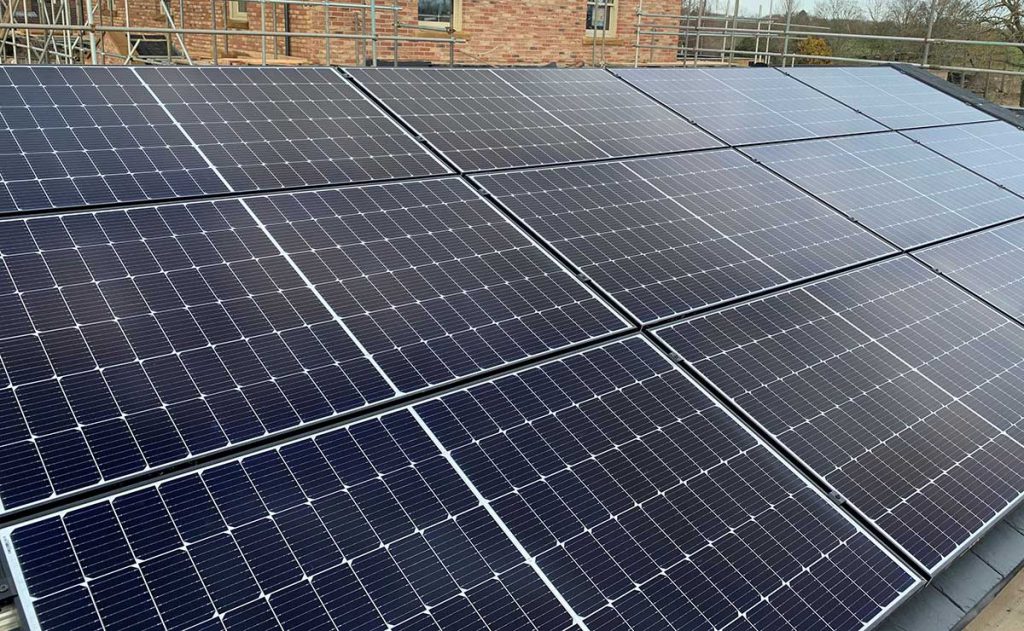
If you already have solar panels installed, you may have noticed a frustrating pattern. Your panels can produce plenty of electricity while you are out during the day, then you start importing electricity from the grid once the sun goes down. A battery can help you keep more of that generation for later.
So, can you add battery storage to existing solar panels? In most cases, yes. You normally do not need to replace the panels already on your roof. The main decisions are how the battery will connect to your existing solar system, whether your current inverter can stay and how much storage suits your electricity usage.
Can You Add a Battery to Existing Solar Panels?
Yes. In most cases, you can add a battery to existing solar panels without replacing the panels themselves. An AC-coupled battery can often work alongside an existing solar inverter, while a DC-coupled battery may require a compatible hybrid inverter. The right option depends on your existing solar setup, solar production, electricity usage and required battery capacity.
That makes a solar battery retrofit possible for many homes with an existing solar PV system.
How Does a Solar Battery Retrofit Work with an Existing Solar System?
Without battery storage, your home uses solar electricity as it is generated. If the panels produce more than you need, excess power can be exported. Later, when generation falls below your energy demand, you return to grid electricity.
A battery storage system lets you store electricity and use that stored energy later. This can improve self-consumption and help you use more of your own solar energy.
When fitting a battery to an existing system, an installer should assess both your solar panels and the electrical equipment already in place, including the existing inverter and consumer unit.
If you are considering a retrofit, UCS Renewables’ battery storage solutions explain how storage can work alongside solar generation.
AC Coupled Battery System or DC Coupled Battery: Which Is Better?
There are two main ways of adding battery storage to existing solar: AC coupled and DC coupled.
Neither is automatically better. The right choice depends heavily on your current solar setup and the condition of the equipment already installed.
Can an AC-Coupled Battery Use My Existing Solar Inverter?
Often, yes. An AC-coupled battery system has its own battery inverter, allowing it to work alongside the solar inverter you already have. In simple terms, your existing inverter can continue handling electricity from your solar panels while the battery system handles charging and discharging separately.
This makes AC-coupled systems useful when the current inverter is working well, and an inverter replacement would add unnecessary upfront cost.
An AC-coupled solution involves additional conversion between DC electricity and AC electricity, so battery performance should still be considered across the whole system rather than looking at one specification in isolation.
When Does a Hybrid Inverter and DC-Coupled System Make Sense?
A DC-coupled battery connects on the DC side of the solar setup and normally works with a compatible hybrid inverter. DC-coupled systems can reduce the number of energy conversions between the solar array and battery.
This route can make more sense with older solar systems where the existing solar inverter is approaching replacement anyway. Installing a new inverter and battery together can sometimes avoid paying for separate work later.
A full system redesign is not always necessary. Your installer should compare both approaches before recommending changes.
Do I Need to Replace My Existing Solar Inverter to Add a Battery?
Not necessarily. Adding a battery does not automatically mean replacing your existing inverter.
If the current inverter is reliable and compatible, an AC-coupled battery may allow it to stay. If it is older, approaching the end of its warranty or you want a DC-coupled system, moving to a hybrid inverter may make more sense.
Before recommending an inverter replacement, the installer should check the make and model of your inverter, its age, warranty status, power rating, condition and compatibility with the proposed battery.
The aim should be to make sure both the solar panels and battery work properly together, not replace functioning equipment without a good reason.
How Much Battery Storage Do You Need?
The right storage capacity depends on how much electricity you use, when you use it and how much surplus electricity your panels generate.
Start with your electricity bills or smart meter data. Look at how much electricity you import after sunset and how much electricity leaves the property when solar production is high.
A larger home battery is not automatically better. More battery capacity usually means a higher upfront cost, so how much storage you install should reflect your real energy demand.
Your normal daily electricity usage, the amount of electricity your panels generate, the level of excess power you regularly export and your evening and overnight consumption should all be considered. Future plans matter too. If you expect to add a heat pump or EV charger, your energy demand could rise considerably. It is also worth deciding whether you want backup power and whether smart controls or a smart tariff will form part of the system.
If your household energy use is changing, UCS Renewables’ residential solar solutions can help you consider both the solar panels and storage as part of the same energy system.
What Could Battery Sizing Look Like in Practice?
Imagine your panels produce more electricity than you use between midday and 4pm. You then return home and begin importing grid electricity between 5pm and 10pm.
Home battery storage could move some of that daytime generation into the evening.
The useful battery capacity should be based on the amount of electricity normally exported and what you tend to use later, rather than simply matching the size of the solar array.
If you plan to add a heat pump or EV charger in the future, that extra demand should also form part of the calculation.
Can Adding a Battery Reduce Your Energy Bills?
Potentially. A solar battery can reduce energy bills by storing surplus solar power for later rather than immediately exporting it.
Depending on the battery installation and electricity tariff, you may also be able to charge using cheap off-peak energy and discharge the battery when electricity prices or grid prices are higher.
That does not mean storing every spare unit is always the best financial decision.
The Smart Export Guarantee pays eligible generators for electricity exported to the grid, with individual suppliers setting their own rates and contract terms. It is worth comparing the value of your export tariff against the cost of importing electricity later before deciding how aggressively to maximise self-consumption.
Battery chemistry matters too. Lithium iron phosphate is widely used in modern home battery systems, but usable capacity, warranty, expected charge cycles and overall battery performance should be considered alongside chemistry.
At the time of writing, qualifying residential electrical storage battery installations are zero-rated for VAT until 31 March 2027, after which the reduced rate is scheduled to apply.
Will a Solar Battery Provide Backup Power During a Power Cut?
Not automatically. Having a home battery does not necessarily mean your lights and appliances will continue working when there is a power cut.
Backup power requires compatible equipment and system design that can safely isolate the relevant circuits from the electricity network during an outage.
If this matters to you, tell the installer before battery storage installation begins. The battery will also need enough usable storage capacity for the appliances or circuits you want to run.
Keeping a few essential circuits powered has very different requirements from providing backup to an entire home.
What Should Be Checked Before Battery Installation?
Before installing batteries, it helps to gather some basic information about the solar setup you already have.
You should know when your solar panels were installed, the make and model of your existing solar inverter and roughly how much electricity your household uses. Recent electricity bills or smart meter data can be particularly useful because they show when you are importing and, in some cases, how much electricity you are exporting.
You should also consider your current export arrangements, including whether you receive Smart Export Guarantee payments. Future changes such as adding an EV charger or heat pump should be mentioned because they can alter the amount of storage that makes sense.
If backup power is important to you, this needs to be discussed before the battery is chosen rather than treated as an afterthought.
The installer should also inspect the consumer unit, available battery location, metering, cable routes and the general condition of the existing solar PV system.
This helps establish whether your current solar setup can remain largely unchanged or whether a new inverter or other electrical work would improve the battery retrofit.
Can Smart Controls Make a Solar Battery More Useful?
Yes. Modern smart controls can change when your battery charges and discharges based on solar production, household demand and electricity prices.
For example, the battery could store excess daytime generation, supply the home during the evening and then use cheaper grid electricity overnight if the tariff makes that worthwhile.
This becomes particularly useful where household demand includes an EV charging system, as the battery, solar panels and vehicle charging schedule can be considered together.
The goal is not simply to store as much energy as possible. It is to use stored energy at the times when it gives your household the greatest practical or financial benefit.
Is Adding a Battery to an Existing Solar System Worth It?
Adding a battery can make sense if your solar panels regularly produce excess power during the day and you then buy electricity back from the grid later.
A smart tariff can also make a battery useful where you can store electricity when it is cheaper and reduce importing electricity when prices rise.
It may be less attractive if you export very little electricity, have low evening demand or receive an export rate that makes selling surplus power particularly valuable.
Before deciding, you should compare the battery installation cost with expected battery performance, usable storage capacity, current electricity prices, export payments and the way your household energy needs may change in future.
The best battery for an existing solar installation is not automatically the largest one. It is the battery system that matches how your home actually generates and uses electricity.
Thinking About Adding a Battery to Your Existing Solar Panels?
If you are asking if you can add a battery to an existing solar system, the answer is usually yes. What matters next is choosing the right connection method, battery capacity and controls for the equipment already installed at your property.
UCS Renewables can assess your current solar setup, existing solar panels, existing inverter and electricity usage before recommending a suitable battery system. That assessment can also account for an AC-coupled solution, DC-coupled option, smart controls, backup power, an EV charger or a heat pump.
If you want to understand whether adding a battery to existing solar makes practical and financial sense for your home, contact UCS Renewables to discuss your current system and battery storage options.