
Rising energy bills put pressure on money that schools would rather spend on pupils, staff and education. With classrooms, kitchens, IT equipment and other school services drawing electricity throughout the day, finding ways to control long-term electricity costs has become increasingly important.
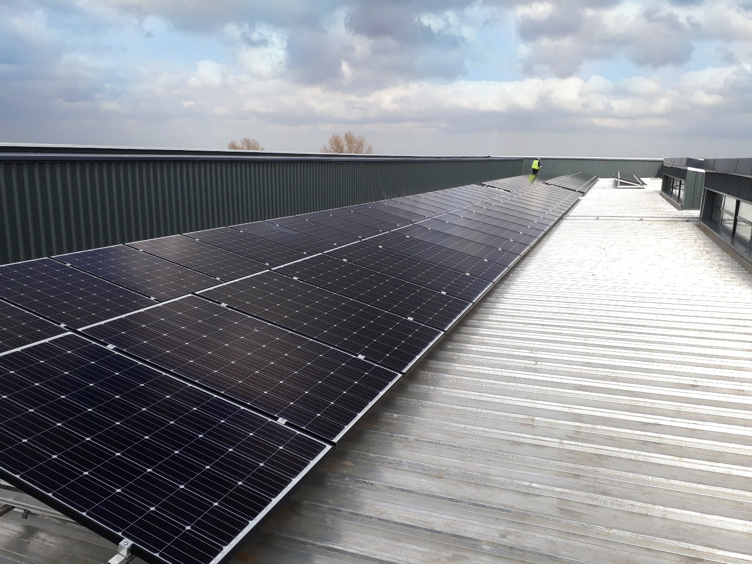
For many education settings, solar panels for schools provide a practical answer. Rooftop solar can generate electricity while the school is operating, reduce reliance on grid electricity and support carbon reduction plans.
The financial case is not identical for every school. Roof condition, electricity consumption, system size, upfront costs and available funding options all affect whether solar stacks up. This guide explains what UK schools should consider before making a decision.
Why Do Solar Panels for Schools UK Make Sense?
Schools have one major advantage when it comes to solar power: much of their energy demand occurs during daylight hours.
A well-designed solar PV system can generate electricity while classrooms, offices, kitchens and sports facilities are being used. This allows more solar production to be consumed directly on site rather than relying entirely on electricity bought from the grid.
For a primary school, secondary school, sixth form or larger academy trust, this can provide greater energy security as well as cost savings.
Most schools do not need to generate enough energy to become completely independent from the grid. The aim is usually to match solar generation closely with daytime consumption so the school buys less electricity at commercial rates.
Are Solar Panels Worth It for Schools?
Yes, solar panels can be worthwhile for schools with suitable roof space and consistent daytime electricity use. A correctly sized solar panel system can cut energy bills, reduce carbon emissions and provide cleaner electricity for classrooms and school facilities.
Whether solar is financially worthwhile depends on electricity usage, available roof space, energy prices, installation costs and the chosen funding model. A site assessment and analysis of recent electricity bills should therefore come before decisions about system size.
How Can Solar PV Help Schools Cut Energy Bills?
When solar PV panels generate electricity, that power can be used by the school before electricity needs to be purchased from the grid.
That makes schools particularly suited to rooftop solar. Unlike buildings that sit empty during the day, schools are generally busiest when solar generation is strongest.
The savings depend on how much electricity the panels produce and how much the school can use at the time it is generated. Any surplus electricity may also be eligible for export payments through the Smart Export Guarantee, subject to the system and electricity supplier meeting the relevant requirements.
Schools considering a larger project can read more about our commercial solar solutions, including how solar PV can be designed around actual energy consumption rather than simply installing as many panels as possible.
What Size Solar PV System Does a School Need?
There is no standard answer.
A small Catholic primary school will have very different electricity requirements from a large secondary school with sports facilities, catering equipment and extensive IT infrastructure.
Before installing solar PV, it is useful to gather:
- recent electricity bills and half-hourly consumption data where available
- information about the condition and age of the roof
- plans for future building or roof works
- details of existing electrical infrastructure
- typical daytime and holiday-period energy consumption.
The goal is to specify high quality solar panels and a system capacity that reflects how the building actually operates.
Can Schools Get Solar Panel Grants for Schools?
Yes, funding for school solar is available through some government, public sector and regional programmes, although eligibility changes over time. Great British Energy is currently supporting solar installations across schools and other public buildings, while Salix Finance administers several public sector energy programmes.
Schools should check current eligibility before assuming a grant, interest free loans or fully funded installation is available. Funding differs by location, ownership structure and individual scheme requirements.
What Is the Great British Energy Solar Programme?
Great British Energy solar investment is already supporting education sites.
As of July 2026, 245 schools and colleges had government-funded solar panels installed, with another 100 joining the Great British Energy Solar Partnership backed by up to £40 million of further government funding. The government estimates that the first wave will save around £220 million collectively over the lifetime of the panels.
Great British Energy solar panels form part of a broader move towards clean energy across public sector buildings, with investment also reaching NHS sites and other public buildings.
Projects have been delivered across different parts of the country, while the current Department for Education PPA pilot includes the East Midlands alongside Yorkshire and Humber and the South East. Funding opportunities can differ in the West Midlands, Scotland, Wales and Northern Ireland, so schools should check schemes relevant to their location.
Can a Power Purchase Agreement Provide Free Solar Panels?
A power purchase agreement, or PPA, can remove much of the initial capital cost.
Under the Department for Education pilot, a private provider finances, installs and maintains the solar installation. The school then agrees to buy the electricity generated at a pre-agreed price, typically below normal grid tariffs. This can provide low cost electricity without the school paying the full upfront costs of buying the system.
The current pilot involves up to 150 schools and colleges. The government hopes wider access will follow from the 2027 to 2028 financial year.
“Free solar panels” should therefore be understood carefully. A PPA can remove the initial purchase cost, but it involves a long-term commercial agreement. Before signed agreements are completed, schools should understand ownership, maintenance, roof access, electricity pricing and how any allowed savings are treated.
What Should Schools Check Before Installing Solar Panels?
Roof condition should come first. Installing new solar panels on a roof that requires major work in the near future can create unnecessary expense.
A professional assessment should consider usable roof area, structural suitability, orientation, shading and access. The condition of the electrical infrastructure and any likely network requirements should also be reviewed before installation.
Schools should also think about disruption. Solar installation work needs to account for pupil safeguarding, deliveries, scaffolding, contractor access and noise. Where possible, disruptive elements can be planned around school holidays or quieter periods.
This preparation is particularly important because Department for Education guidance states that non-pilot PPA applications will not be approved where the proposed roof is in poor condition.
Should Solar Be Combined With Other Energy Efficiency Measures?
Solar works best as part of a wider look at how the whole school uses electricity.
LED lighting, controls and other energy efficiency measures can reduce demand before the solar PV system is sized. Salix Finance programmes can also support certain energy efficiency projects, although individual eligibility rules apply and solar is not automatically funded as a standalone measure under every scheme.
Complementary technologies can include battery storage. A battery may store surplus solar electricity for later use, although it is not necessary for every site. Check out our battery storage solutions and learn how stored energy can form part of a wider renewable energy system.
The priority should be to improve energy efficiency and choose technology that produces useful savings rather than adding equipment simply because it is available.
Can Solar Panels Support Climate Education?
The benefits do not have to stop with the finance department.
Solar provides a visible example of renewable energy that pupils can connect to lessons about climate change, carbon dioxide, electricity generation and the carbon footprint of buildings.
Live generation data can help turn climate education into something tangible. Pupils can see how much clean power their school is producing and understand how energy efficiency affects consumption across the whole school.
For schools developing climate action plans, that can make the solar installation part of education rather than simply another piece of equipment on the roof.
How Should Your School Get Started With Solar?
Start with your electricity use and building condition rather than choosing panels.
Review energy data, identify suitable roof areas and consider any planned maintenance. A solar specialist can then calculate likely generation, consumption, installation costs and potential cost savings before recommending an appropriate system.
Funding should be considered at the same stage. Depending on the school and location, this could mean capital investment, Great British Energy support, a power purchase agreement, Salix Finance programmes or other funding options.
At UCS Renewables, we can assess your site and explain what a realistic school solar project could look like. We can also consider EV charging infrastructure and other complementary technologies where they form part of a wider energy plan.
If your school, college or academy trust is considering solar, contact UCS Renewables to discuss your site, energy use and the next practical steps towards reducing electricity costs with solar power.