Energy bills are still one of the biggest cost pressures for UK businesses. If your company uses a lot of electricity during the day, every price rise can make budgeting harder and eat into your profit.
That is why more companies are looking at solar panels for business. A well-designed solar PV system can help you generate electricity on-site, use more of your own power and reduce how much electricity you buy from the National Grid.
This guide explains how business solar panels work, what affects the cost, what grants or funding routes may be available, and how to decide whether solar makes financial sense for your premises.
Are Solar Panels Worth It for Businesses?
Solar panels are often worth it for businesses that use electricity during the day and have suitable roof space or ground space. A solar PV system can reduce energy bills, cut carbon emissions, improve energy security and support net zero emissions targets. The return depends on how much electricity your business uses, system size, installation cost, export tariff rates and whether battery storage is included.
For many businesses, the biggest saving comes from using the energy produced by the panels on-site.
If your office, warehouse, school, factory, retail unit or commercial building is active while the sun rises and throughout the working day, solar power may help reduce daytime electricity costs.
How Do Business Solar Panels Work?
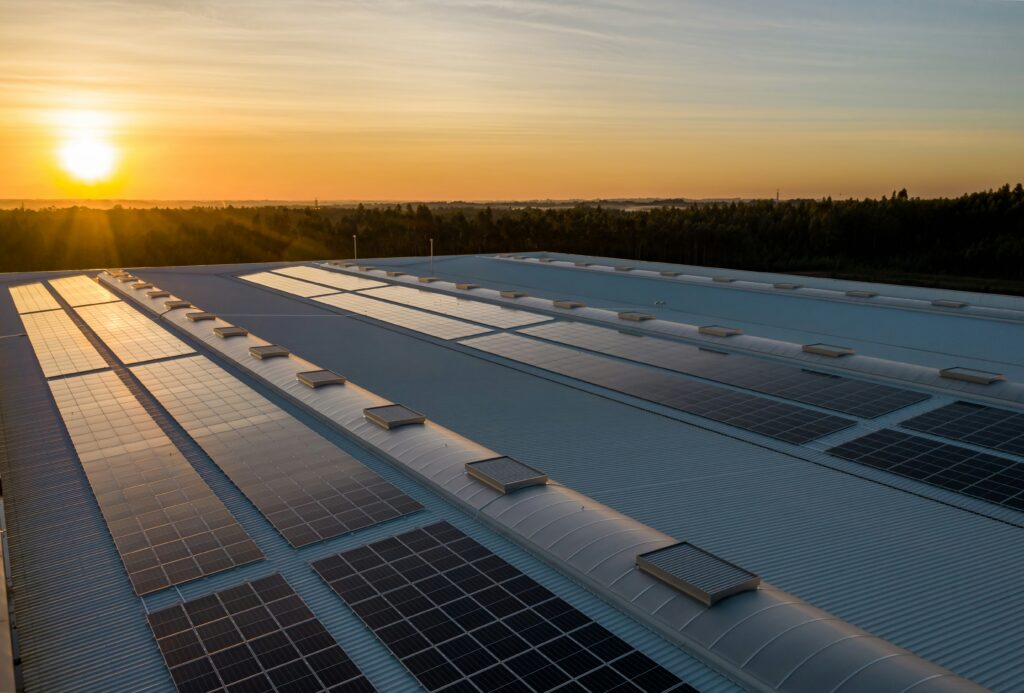
Business solar panels use photovoltaic technology, usually called solar PV, to turn daylight into electricity.
A typical solar panel system includes:
- Solar panels
- Mounting equipment
- A solar inverter
- A smart meter
- Monitoring software
- Optional battery storage
- Optional EV charging points
The panels generate electricity during daylight hours. The inverter then converts that electricity into usable power for your building.
Your business uses the solar energy first. If the system generates excess energy, that excess electricity can either be stored in a battery or exported to the grid through an export tariff.
This is why good system design matters. Installing solar panels without looking at how much electricity your business uses, when it uses it and how much roof space is available can lead to poor returns.
Business Solar Panels Cost: What Should You Budget For?
There is no fixed answer to business solar panels cost, because every site is different.
A small office will not need the same solar PV installation as a manufacturing site, warehouse, school or large retail building. The right system depends on the premises, the electricity demand and the amount of usable space.
The main cost factors include:
- Number of solar panels required.
- Size of the solar PV system.
- Roof type, pitch and condition.
- Access requirements.
- Scaffolding or lifting equipment.
- Electrical infrastructure.
- Battery storage.
- Monitoring equipment.
- Whether EV charging or heat pumps are part of the project.
A useful way to think about cost is this:
The cheapest system is not always the best value. The right system is the one that matches your business energy use and gives a sensible payback period.
For example, a business with high daytime electricity costs may get more value from solar than a business that uses most of its electricity overnight. The more solar energy you use on-site, the less electricity you need to buy from your supplier.
Are There Business Solar Panels Grants in the UK?
Many companies search for business solar panels grants before they speak to an installer. That makes sense, because the upfront cost is usually one of the first concerns.
The honest answer is that grant availability changes. Funding depends on your location, business size, sector, energy use and the schemes open at the time.
Grants for Solar Panels on Commercial Buildings UK
When researching grants for solar panels on commercial buildings UK, look into:
- Local authority net zero schemes.
- Regional business energy funding.
- Sustainability grants.
- Green business loans.
- Interest free loans where available.
- Power purchase agreements.
- Asset finance or leasing.
- Capital allowances.
- Possible tax breaks, with advice from your accountant.
- The Industrial Energy Transformation Fund for eligible high-energy users.
The Industrial Energy Transformation Fund is not a general solar grant for every business. It is aimed at high-energy businesses moving towards lower carbon technology and energy efficiency improvements.
Some local schemes may also support energy-efficient technologies, green technologies or renewable energy generation, but funding windows can open and close quickly.
The best step is to check current options before committing to a project.
What Is the Smart Export Guarantee SEG?
The Smart Export Guarantee SEG can allow eligible businesses to receive payment for renewable electricity exported to the National Grid.
In plain English, if your solar PV system generates more electricity than your business uses at the time, you may be able to sell some excess electricity through an export tariff.
The export tariff can help improve returns, but it should not be the only reason to install solar.
For most UK businesses, the stronger saving usually comes from using solar energy on-site. Selling excess energy can help, but buying less electricity in the first place is often more valuable.
Can Small Business Solar Panels Make Financial Sense?
Yes, small business solar panels can still work well.
A smaller business does not always need a large commercial solar installation to benefit. Shops, offices, cafés, workshops, clinics, local warehouses and trade premises may all be suitable if they use electricity during the day.
Small business solar panels may help reduce:
- Electricity bills.
- Operating costs.
- Business electricity costs.
- Reliance on the National Grid.
- Carbon footprint.
- Exposure to future energy costs.
For example, a small business using lighting, computers, tills, refrigeration, tools or equipment through the day may use much of the solar power as it is generated.
Solar can also be planned alongside other upgrades, such as LED lighting, battery storage, EV charging or heat pumps.
What Are the Best Business Solar Panels for Your Premises?
The best business solar panels are not always the panels with the highest output on paper.
The right choice depends on your building, electricity use, roof condition, available space and long-term plans.
When choosing solar panels, look at:
- Panel efficiency.
- Product warranty.
- Performance warranty.
- Manufacturer reputation.
- Inverter quality.
- Monitoring options.
- Maintenance requirements.
- Installer experience.
- Expected payback period.
- How much electricity the system should generate each year.
A good installer should not simply fill your roof with panels. They should design the solar energy system around your business premises and the amount of energy generation your site can realistically support.
That is where commercial solar design becomes useful. The aim is to generate clean energy that your business can use, not just install as many panels as possible.
Is Your Business Suitable for Solar Panels?
Before you install solar, it is worth doing a quick suitability check.
Your business may be a good fit if:
- You use a lot of electricity during daylight hours.
- You have clear roof space or ground space.
- Your roof is in good condition.
- The building has limited shading.
- You want to reduce energy costs.
- You plan to stay in the premises long enough to benefit.
- You are looking at EV charging, battery storage or heat pumps.
- You want to reduce carbon emissions.
- You need stronger evidence for ESG or net zero reporting.
Your site may need more detailed checks if:
- The roof is old or damaged.
- The building is listed.
- The site is in a conservation area.
- There are trees, chimneys or taller buildings causing shade.
- The roof structure needs assessment.
- The system may require planning permission.
If you are unsure, a site survey is the best way to move from guesswork to clear figures.
UCS Renewables provides commercial solar solutions for UK businesses, including system design, installation and advice on how solar could work for your premises.
Should You Add Battery Storage?
Battery storage can help a business use more of the renewable energy it generates.
Without a battery, unused solar power is normally exported to the grid. With a battery, some stored energy can be used later, such as late afternoon, early evening or during busier periods.
Battery storage may be useful if your business:
- Generates excess energy during the day.
- Uses electricity outside peak sunlight hours.
- Wants more control over energy use.
- Plans to install EV charging.
- Has high electricity costs at certain times.
- Wants better energy security.
- Wants to make more use of its own power.
Battery storage will not be right for every site, but it can make financial sense where the usage pattern supports it.
For more detail, UCS Renewables explains how battery storage can work alongside solar PV systems.
What Should Businesses Know About Octopus Energy Business Solar Panels and Export Tariffs?
Octopus Energy business solar panels are often linked to export tariffs, business energy contracts and the Smart Export Guarantee.
It is sensible to compare export tariff options. Rates, eligibility and supplier terms can affect how much you receive for excess electricity.
But supplier choice is only one part of the decision.
Before focusing on export income, ask:
- How much solar power will we use on-site?
- How much excess electricity are we likely to export?
- Do we have a smart meter?
- Would battery storage reduce waste?
- Are we choosing solar panels based on long-term savings or short-term tariff rates?
For many businesses investing in solar, the main return comes from lower electricity bills, not export payments.
How Does Solar Fit With EV Charging?
If your business is planning electric vehicle charging, solar can help support the extra demand.
EV charging can increase business electricity costs, especially if multiple vehicles charge during working hours. Solar panels can help offset some of that demand when vehicles are parked and charging during the day.
This can work well for:
- Staff parking
- Fleet vehicles
- Visitor charging
- Retail sites
- Offices
- Warehouses
- Public sector buildings
Solar, battery storage and EV charging should be planned together where possible. That helps you understand load demand, peak usage and how much renewable energy generation can realistically support the site.
UCS Renewables also installs charging points for commercial premises.
Is Solar the Right Move for Your Business?
Solar panels for business can help reduce energy bills, cut carbon emissions and give your company more control over electricity use.
The best results come from good planning. That means looking at your business energy data, roof space, daytime demand, budget, funding options and future plans before choosing a solar panel system.
UCS Renewables is based at Brighouse Business Village in Riverside Park, Middlesbrough, and works with businesses, public sector organisations and commercial property owners across the UK.
If you are comparing business solar panels cost, looking into business solar panels grants or trying to work out whether small business solar panels are worth it, the next step is a site-specific review.
Speak to UCS Renewables to arrange a free, no-obligation consultation and find out whether solar PV is right for your business premises.